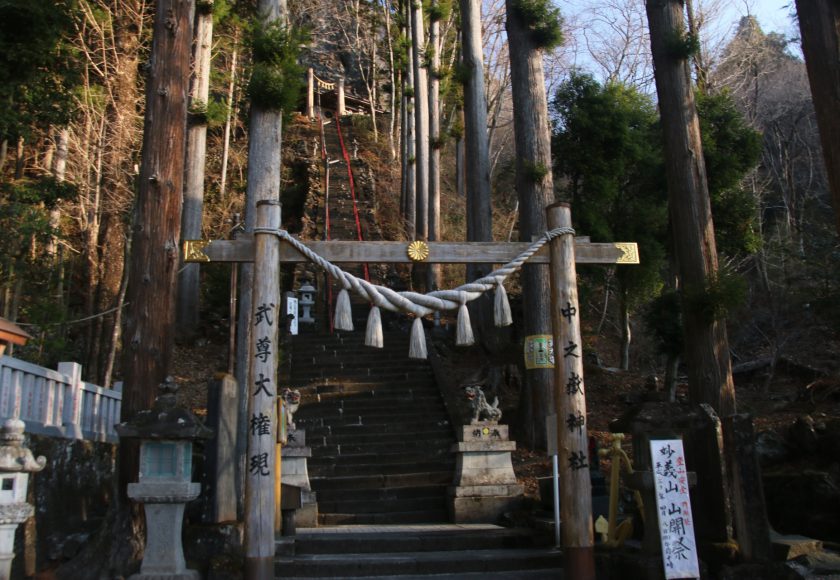
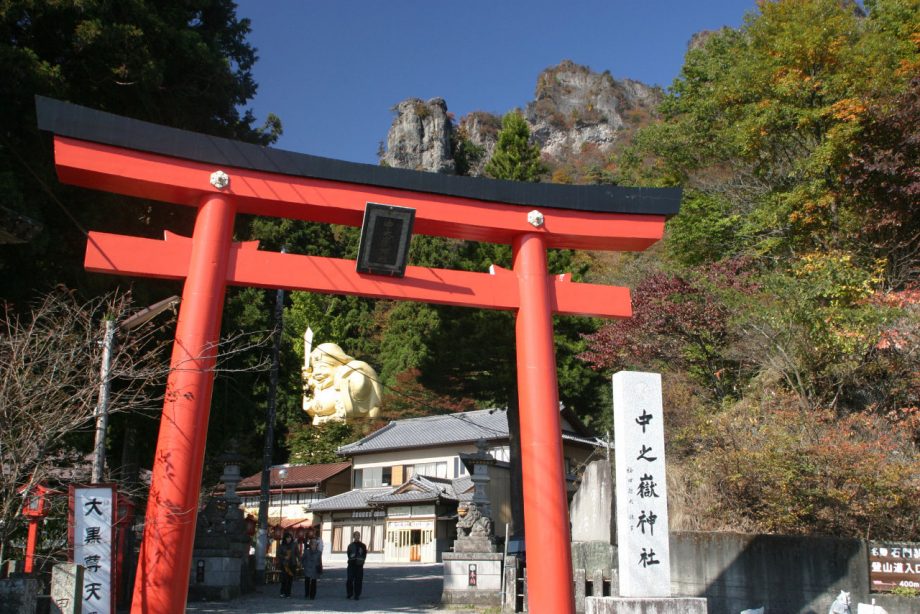
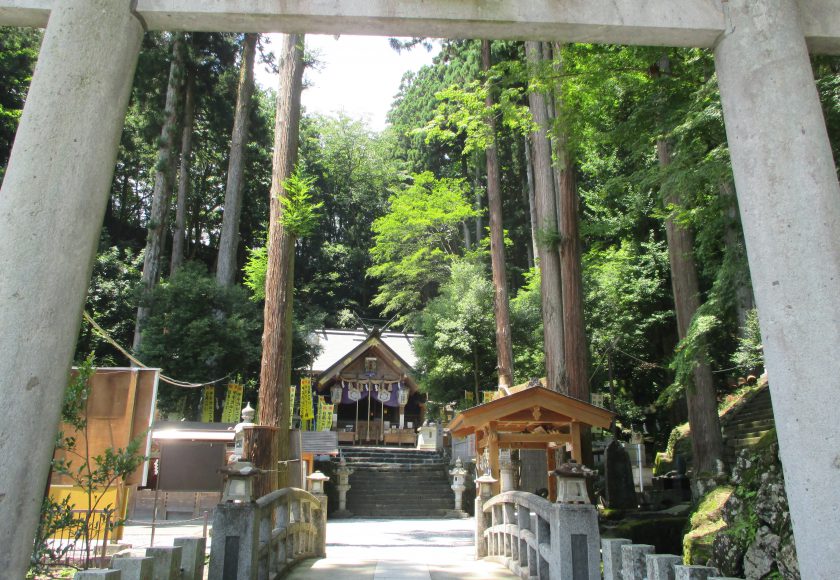
Nakanotake Shrine has a long history dating back to the 6th century. According to shrine tradition, its first shrine building was constructed during the reign of Emperor Kinmei (539–571).
In 1183, during the reign of Emperor Go-Toba, Fujiwara no Suketane is said to have commissioned a master swordsmith to create a sacred sword, which was then enshrined at the shrine.
During the Edo period, the shrine was revived in 1616 under Kato Nagakiyo, who became its chief religious leader and protected its sacred treasures. The shrine later received the support of various feudal lords. Oda Nobuhisa, lord of the Obata Domain, rebuilt the shrine buildings, established an administrative office for Nakanotake, and donated land to the shrine.
- Location
- 1248 Kamiosaka, Shimonita, Kanra District, Gunma 370-2621
- Access
- By Car
About 15 minutes from Matsuida-Myogi IC on the Joshin-Etsu Expressway
About 25 minutes from Shimonita IC on the Joshin-Etsu Expressway via National Route 254
By Train
From Takasaki Station, take the JR Shin-etsu Main Line to Isobe Station, then approximately 25 minutes by taxi
From Takasaki Station, take the Joshin Railway to Shimonita Station, then approximately 25 minutes by taxi - Parking
- Gunma Prefectural Myogi Park Parking Area
30 buses / 500 cars
Restrooms, including accessible facilities, are available. - Tel
- 0274-82-5671
- FAX
- 0274-82-2881
- URL
- http://www.nakanotake.com/
Recommended Course
This popular hiking route explores the remarkable rock formations and stone arches of Mt. Myogi, one of Japan’s three most celebrated scenic landscapes.
Starting from Nakanotake Shrine, known for its association with good relationships and matchmaking, the route takes hikers through the spectacular natural scenery of Mt. Myogi, including four impressive natural stone arches.
The route begins at the Nakanotake parking area and passes through the Stone Gates, Taiho-iwa Rock, and scenic viewpoints before returning to Nakanotake Shrine.
Several sections of the trail are equipped with chains, including areas known as Kani-no-Yokobai, Tatebari, and Tsurube-sagari. These sections require particular care. Alternative routes that avoid some of the chain-assisted sections are also available.
Please wear appropriate footwear and exercise caution when hiking.